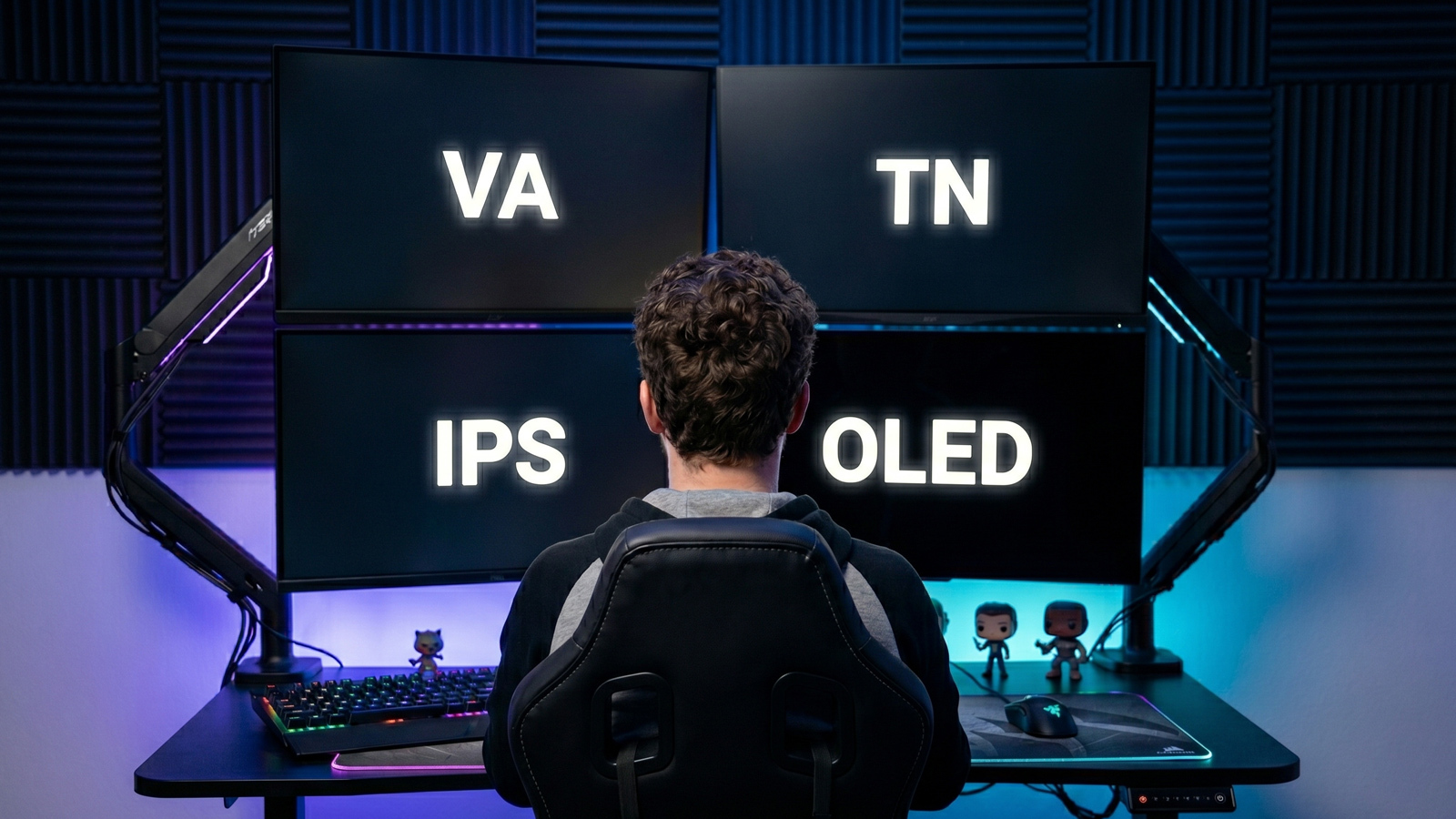


When buying a gaming monitor, it is important to choose the right panel technology for your specific needs.
There are four main types of monitor display panel technologies on the South African market – IPS, VA, TN, and OLED.
These panel technologies fall into two main display configurations:
- A self-emitting display with a single-panel setup.
- A transmissive display with a dual-panel setup.
Self-emitting displays are the newer technology on the market, which offer exceptional picture quality, but at a steep price.
Currently, the only commonly commercially available self-emitting display panel type for monitors is OLED (Organic Light-Emitting Diode).
A more recent emergence in the self-emitting display technology is MicroLED, but it is prohibitively expensive.
The key difference with self-emitting panels like OLED is that they do not rely on a second panel to illuminate the image on your screen.
This means they produce far greater contrasts, as they can turn pixels off entirely to create deep blacks.
They also typically offer better refresh rates and extremely low response times.
In fact, OLED monitors are superior to Liquid Crystal Displays (LCDs) in almost every way – but this comes at a price premium that most gamers won’t be willing to pay.
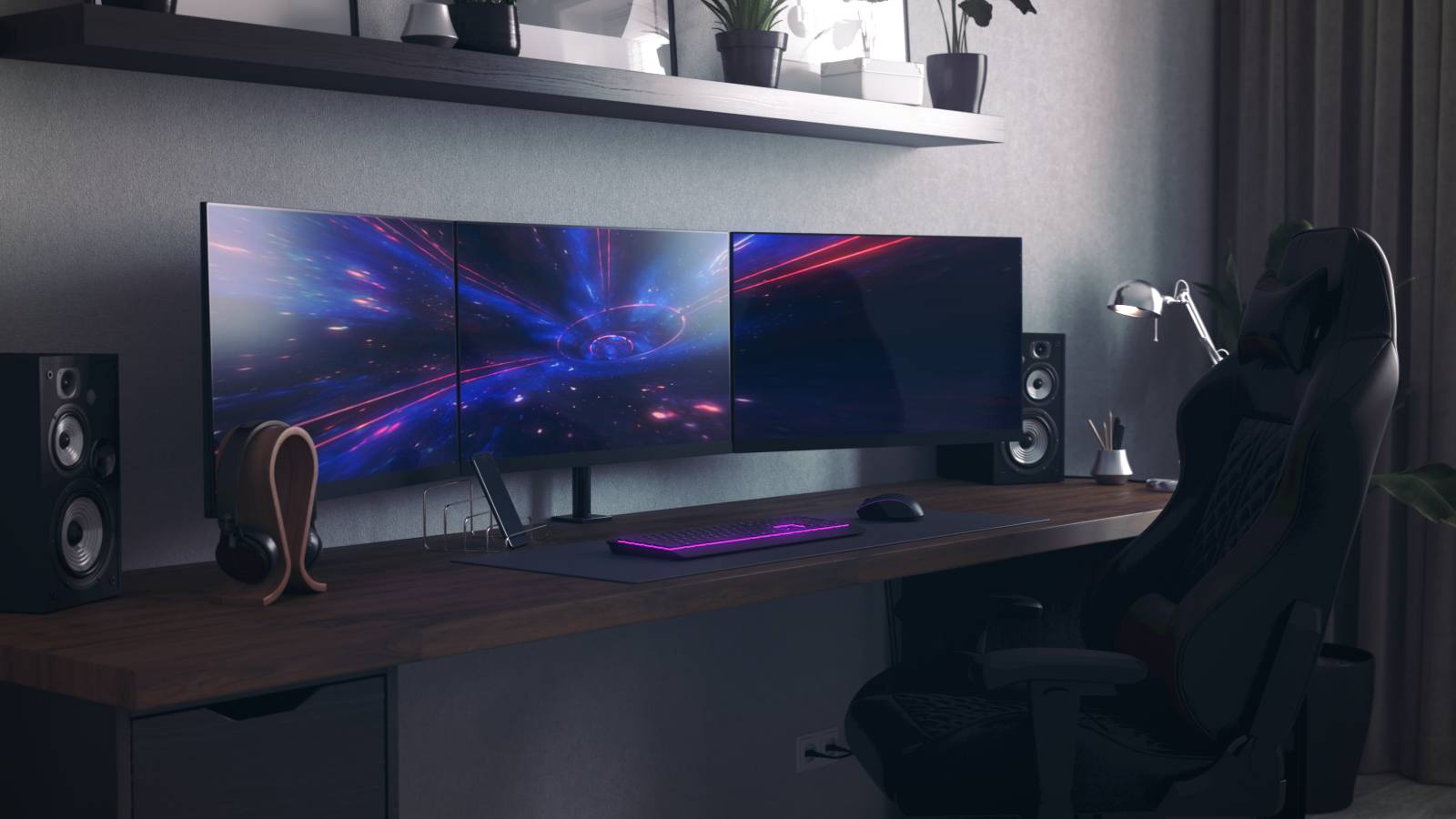
LCD monitors
The more traditional transmissive LCD dual-panel types comprise a panel of LEDs (known as the backlighting panel), which shine through and illuminate a viewer-facing LCD panel, producing the picture you see.
LCDs are made up of thousands of tiny liquid crystal pixels, and each pixel contains three subpixels.
A colour filter sits on top of these subpixels, assigning a colour to each of them – red, green, and blue.
Electrical currents are applied to the crystals to allow different wavelengths of light to pass through and hit the different colours, and this creates the picture you see.
There are three types of LCD panels to choose from on the South African market.
Each panel type uses different technologies to control the way light is released onto the colour filter, resulting in different picture qualities, as well as other benefits and draw backs.
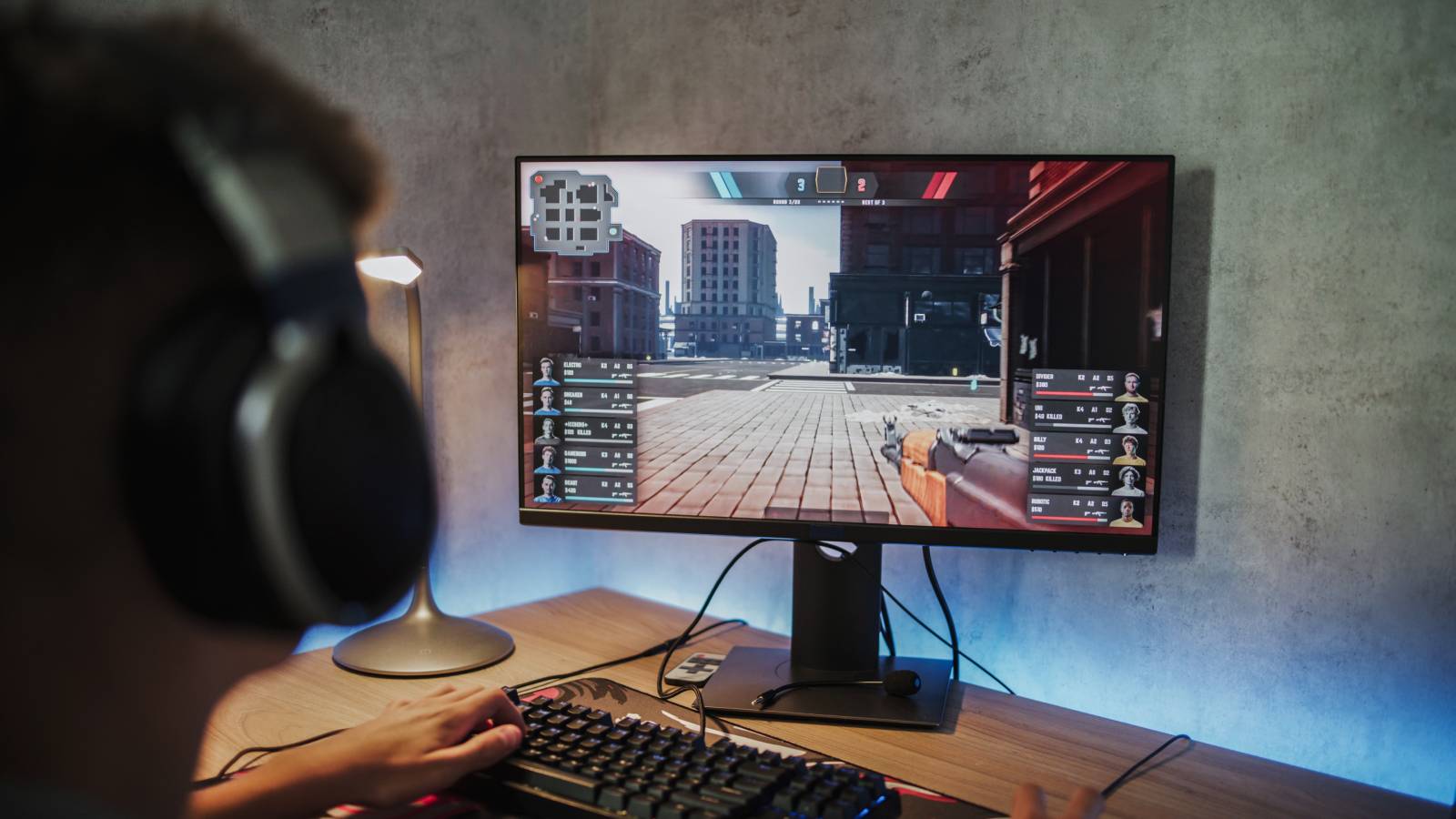
1. TN – Twisted Nematic
TN displays are the oldest type of LCD panels. In TN panels, the liquid crystals are twisted to let light pass through, or untwisted to block the backlight.
This process is extremely fast, enabling TN monitors to achieve fast response times (around 1ms) and high refresh rates (over 120Hz).
However, they are prone to having a poor colour gamut and sub-par viewing-angles.
If you just want speed for fast FPS games, and you’re not after the best display fidelity and colour reproduction, a TN panel is a great choice.
2. VA – Vertical Alignment
VA monitors have largely overtaken TN monitors in popularity.
In VA panels, the liquid crystals follow a different arrangement to let light through. They are initially vertical to block the backlight, and rotate to let the light through when charged.
This has a much better impact on colour gamuts and viewing angles, as less light scatter occurs. They also offer decent contrasts.
As a result, VA panels offer significantly improved visuals, but the action of tilting the crystals is slower, meaning they have slower response times and refresh rates than TN panels.
They are also more prone to ghosting effects.
If you’re more into cinematic games and not after high-intensity, quick-reaction gameplay, a VA monitor is perfect for you.
3. IPS – In-Plane Switching
In IPS panels, the liquid crystals are parallel to the screen and rotate like a clock, staying flat.
This has a negative impact on contrasts and blacks because they are unable to fully block out the backlight, resulting in dark gray colours instead of deep blacks.
However, when it comes to response times, IPS panels sit between TN and VA panels, and are fast enough for modern games.
They are the best LCD panels for colour accuracy and brightness, offering 20-30% more colour space than TNs.
Their decent speeds combined with this exceptional colour accuracy make IPS monitors exceptional all-rounders for gamers.
Below is a table comparing all three LCD monitor types.
| Feature | IPS | VA | TN |
|---|---|---|---|
| Colour accuracy | Best | Average | Worst |
| Contrasts and Blacks | Average | Best | Worst |
| Viewing angles | Best | Average | Worst |
| Response times | Average | Worst | Best |
| Affordability | Worst | Average | Best |






 Loading ...