
South Africa’s laws and regulations do not clearly determine whether gaming loot boxes are legal – despite several other countries having strict regulations to limit their negative impact.
Loot boxes are purchasable “mystery packets” within a video game that contain various in-game items.
For example: in a first-person shooter, a loot box could contain cosmetics for guns, knives, and armor.
These items vary in rarity – and the goal of opening a loot box is hoping that you “strike gold” and get one of the rarest items.
However, in most cases, you will not get lucky – and will instead get common, unvaluable items.
Critics claim that this design makes loot boxes a form of online gambling, and they should be regulated as such.
However, South Africa’s laws and regulations are vague when it comes to loot boxes – meaning that for now, they are being allowed to run rampant in video games.

National Gambling Act
An article by legal firm Webber Wentzel highlights what is defined as a ‘gambling game’ in the National Gambling Act.
The point of contention for loot boxes is that the act defines a payout as “any money, merchandise, property, a cheque, credit, electronic credit, a debit, a token, a ticket or anything else of value won by a player.”
The argument against loot boxes being gambling in South Africa is that the virtual items have no value, as the perceived value only exists within the game itself.
According to this argument, the items a gamer receives from a loot box cannot, therefore, constitute a payout.
The counter-argument, according to Webber Wentzel, is two-fold:
- The value of the virtual item does exist – it is the amount paid by the consumer to buy the loot box.
- The National Gambling Act does not require the pay-out to have value for all people, but rather to have some form of value to someone.
Webber Wentzel also highlighted that some virtual items can be traded outside of the game for real-world cash – thereby assigning them monetary value.

Lotteries Act
If loot boxes are not deemed by lawmakers to be covered under the National Gambling Act, they could still be regulated by the Lotteries Act.
This act defines a lottery as:
“Any game, scheme, arrangement, system, plan, promotional competition or device for distributing prizes by lot or chance and any game, scheme, arrangement, system, plan, competition or device, which the Minister may by notice in the Gazette declare to be a lottery.”
Classification of loot boxes as lotteries is possible under the above definition – but it is a grey area.
The argument against loot boxes being lotteries is that a video game and its loot box system form a single, indivisible product – as loot boxes rely on their video game to exist.
Because video games are designed for entertainment, rather than to distribute prizes “by lot or chance,” loot boxes are therefore part of a larger entertainment product, rather than existing as a standalone lottery.
The counter argument is that the loot box system is, in fact, separate from the video game.
In Belgium, for example, it was determined that video games can function as intended without a loot box system.
This argument forced Activision Blizzard to remove loot boxes from several of its games in the country.
International precedent

Belgium also determined that buying loot boxes is gambling – and it therefore recommended a ban on minors purchasing games that have loot boxes.
This also resulted in the Belgium Gambling Commission forcing games sold in Belgium to remove loot boxes if they want to keep operating – and many developers have complied.
Alongside Belgium, several other countries have also taken steps against loot boxes.
In September 2025, Brazil banned loot boxes in video games that are likely to be accessed by children and teenagers under the age of 18.
The Netherlands, meanwhile, requires all video games that want to offer loot boxes to get a specific gambling permit.
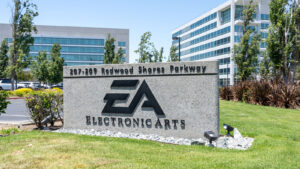
However, the Netherlands Administrative Jurisdiction Division of the Council of State also determined that a penalty was wrongfully imposed on EA for its FIFA Ultimate Team loot boxes – finding that these purchasables were not games of chance.
In China, loot box regulations force all developers to disclose the probabilities of each loot box.
China also requires gamers to undergo age verification before buying loot boxes to protect minors.
These are just a few of the countries that have taken an active stance against loot boxes – but many more have not yet made their move, including South Africa.





 Loading ...