
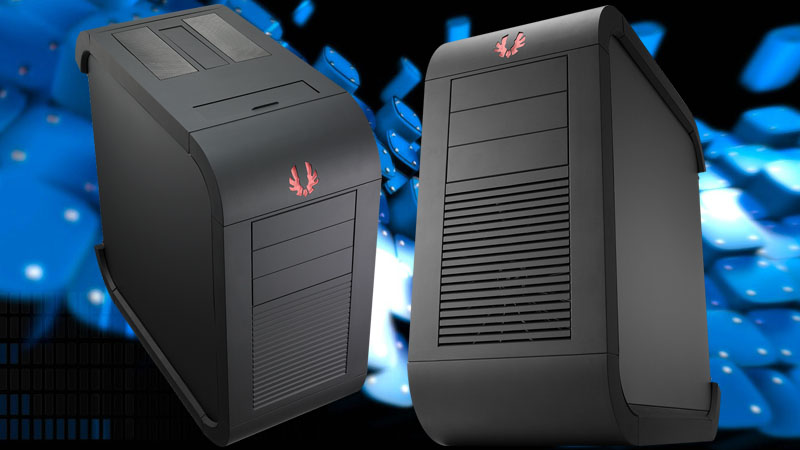


Following on from our review of the BitFenix Colossus, we have the BitFenix Survivor from local South African retail store Evetech in for review.
Rather than a massive full tower chassis with plenty of installation space and a long list of feature like the Colossus, the Survivor is a mid-sized chassis aimed at either LANners or media PC enthusiasts. With this in mind, we set out reviewing the Survivor.
Specifications
The case is an ATX Mid Tower, measuring 230 x 502 x 510 mm (WxHxD) and weighing in at 9.4kg when empty.
Possibly the highlight of the case is the carry handle used for easy transportation. The handle folds out of the top of the unit, and is large enough without being uncomfortable for small hands. When not in use it folds away and clips into the case shell.
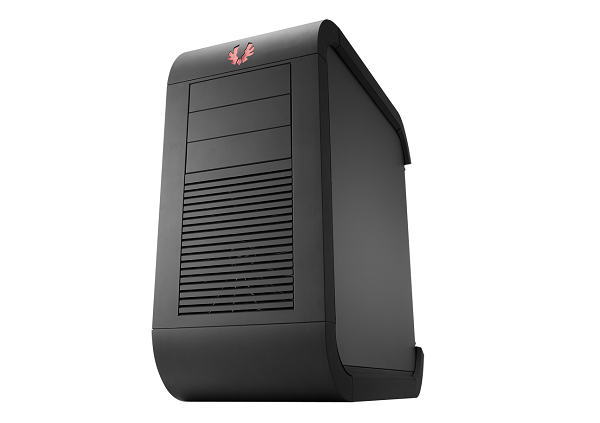
BitFenix Survivor angle view
The Survivor can accommodate three external 5.25-inch drives, and up to seven 3.5-inch drives; impressive considering the case’s form factor. BitFenix claim that the case supports up to 9 2.5-inch drive bays, but these can’t be used when 3.5-inch drives are installed.
The case also sports 7 PCIe slots, though there isn’t enough room to fit a Tri-CrossFireX setup in the Survivor.
A bottom mounted PSU, tool free design, and 200mm front cooling fan round off the list of noteworthy features.
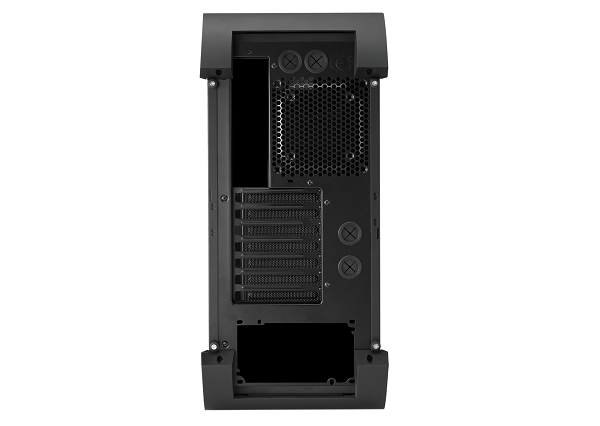
BitFenix Survivor rear view
Installation
Installation was easier than expected despite the small size of the case. There is enough space in the case to install standard ATX-sized motherboards and work inside the case without much hassle.
Cable management is good inside the Survivor. Despite its short stature, the case is very wide which allows it to leave a generous amount of space behind the motherboard tray for routing cables. Cable management holes are placed strategically around the outer edge of the motherboard to allow power and data cables to plug in without much fuss.
General usage
First things first, the case handle. While a brilliant idea, in practise it is rather poorly implemented. The handle doesn’t feel sturdy enough to support an entire system for any period of time. Our test bed consisted of a single graphics card, an all-in-one watercooling loop with a single radiator, four 3.5-inch hard drives and one 2.5-inch solid state drive. This regular system proved to be too much of a burden, and would surely have broken the handle had we carried the machine more than two steps.
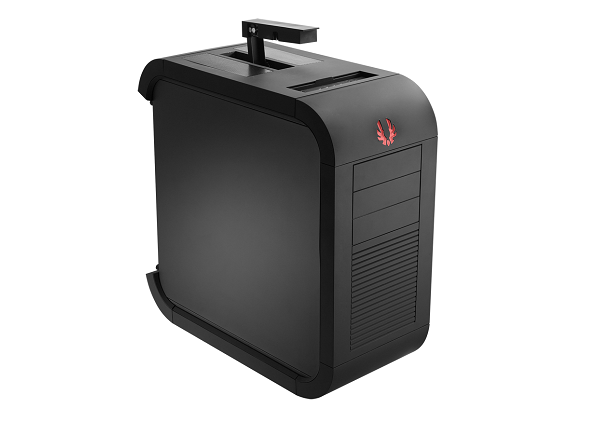
BitFenix Survivor side, handle shown
The clip mechanism used to keep the handled tucked away into the body of the case also felt less than reliable. After a few weeks of use I wouldn’t be surprised to see the clip snapping off.
The case also features a shaped plastic covering over the top and bottom panels, half for aesthetics and half for security. In theory users can’t remove one of the side panels without first removing both the top and bottom coverings from both side panels. In practice this was not the case. Removing the screws from a single side of the covering allowed enough space to remove the side panel without much effort at all.
The last bad point worth mentioning is the plastic flap that covers the external I/O ports on the top front of the case. This was very poor quality and we handled it with care to avoid breaking it. It gives a very cheap feel to an otherwise solid case.

Bitfenix Survivor side
Beyond this though, the BitFenix Survivor is a good size for a LAN/Media PC. It doesn’t look too gaudy, and could actually fit in well with a modern home theatre system and LED TV. Handle aside, transporting the case is also easy. Despite its hefty weight (as far as a case of this size is concerned), it fits snugly in a large sports bag or front seat of a car.
The SoftTouch coating is also a plus when it comes to transporting the case. It stands up well to the occasional bump and scratch, and continues to look good even after use.
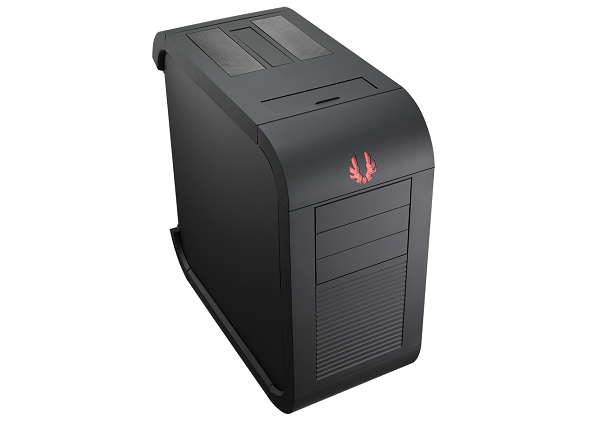
BitFenix Survivor top view
Conclusion
The BitFenix Survivor case at first glance is the perfect case for a gamer on the move. It’s small enough to be transported easily, and features a carry handle that folds away neatly when not in use. In practice however, both of these are a bit of a let-down.
The case weighs in at 9.4kg without a system installed and over 14kg with components – too much for it to claim to be a mobile solution.
The handle is also a worry; our unit felt incredibly flimsy and I avoided using the handle to carry the system for any length of time, fearing it would break off. A feature you’re too worried about using because it feels flimsy isn’t really a feature.
The above issues aside, at R999.00 the BitFenix Survivor is a solid offering for those looking for a medium sized case to be used as either a media PC or LAN system.






 Loading ...

I’d love it when mygaming start actually taking photos of the products they are reviewing, it just gives you a better perspective of how big the product really is, among other things.