

You are using an out of date browser. It may not display this or other websites correctly.
You should upgrade or use an alternative browser.
You should upgrade or use an alternative browser.
GeoHot takes vacation in South America amidst Sony hack case
- Thread starter Tinman
- Start date


nasssty
New member
Lol, I bet all the people who "helped" him with donations are pissed off now!
Lesson: Don't support piracy kids!
Lol! Yeah, when I read the article I was thinking: "Wasn't this guy asking for donations from the public to help foot his lawyers bill"
Maybe he is on this holiday using his own hard earned cash, but then that raises the question why did he not use his own cash to pay for his legal bills rather than ask for donations....


Duke Dude
New member
Lol! Yeah, when I read the article I was thinking: "Wasn't this guy asking for donations from the public to help foot his lawyers bill"
Maybe he is on this holiday using his own hard earned cash, but then that raises the question why did he not use his own cash to pay for his legal bills rather than ask for donations....
Why spend your own cash when you can spend someone else's?
He knows he has a lot of fans and therefore milked them...


sycogrim
MyGaming Comp Authoritah
I gotta agree with you there Azi, I don't support him in anyway but ja what people do with the stuff they buy, should be at their own discretion. Geohot shouldn't have posted the source code to the entire world, he should have posted proof that he did it, but not the entire source code. He could have sold his work to Sony for MILLIONS but instead what he did got him in trouble...

OmegaFenix
The Legendary Troll Hunter
While there's definitely a discussion worth having about doing whatever you want with your own stuff, I think it's becoming increasingly difficult to support this obnoxious twit.
And by you Master Yoda means him V
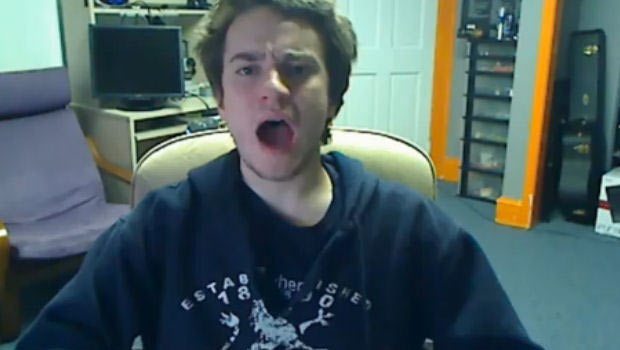
Being an obnoxious douche is why he is going to loose this case against sony.

OmegaFenix
The Legendary Troll Hunter


OmegaFenix
The Legendary Troll Hunter
douche means shower folks...
go check the words...
for saying dis ou be a douche bag you tuning he be a shower bag...
I did. - http://www.urbandictionary.com/define.php?term=douche
sycogrim
MyGaming Comp Authoritah
You realize it's a lawsuit and not a criminal case??LMAO... That is super funny all i am saying... If he get thrown in jail it is his own problem now... If i did nothing wrong i sit there waiting it out... but he ran away.. too bad...


ZAP_Tech
New member
You realize it's a lawsuit and not a criminal case??
My apologies... I forget he can't get sent to prison... Misconception on my behalf..
ZAP_Tech
New member
http://mygaming.co.za/news/news/109...y-Computer-Entertainment-America-existed.html
Think so one need to read this:
Ignorance of the law is no excuse
The statement "ignorance of the law is no excuse" is an ancient legal doctrine:
Ignorance of the law excuses no man; not that all men know the law; but because 'tis an excuse every man will plead, and no man can tell how to confute him.
John Selden (1584-1654), posthumously published in Table Talk, 1689.
If a defendant were allowed to escape legal responsibility for his acts, merely by saying "I didn't know it was wrong/illegal", the system of using law to regulate human conduct would collapse. So the doctrine is a practical necessity.
This doctrine still has vitality and validity today. See, for example, Ratzlaf v. U.S., 510 U.S. 135, 149 (1994); U.S. v. Freed, 401 U.S. 601, 612 (1971) (Brennan, J., concurring); Minnesota v. King, 257 N.W.2d 693, 697 (1977).
However, the law in the USA has swelled to a size that is unknowable even by experts. In Oct 1998, the annotated edition of the U.S. Code (i.e., federal statutes) occupied 990 cm of library shelf space. In Oct 1998, the annotated edition of the New York state statutes occupied 675 cm of library shelf space. Who can know all that is within these pages? A criminal law class in law school contains only about 40 hours of lectures, mostly about homicides, with a little about larceny and rape. The only solution seems to be a detailed search of statutes and cases in a database on a computer (e.g., WESTLAW), plus the avoidance of any behavior that harms people, either through physical, financial, or emotional injury, or by deceit.
A related concept in law is "wilful blindness": the criminal defendant who should have known, and could have asked, but deliberately chose not to ask. The law regards "wilful blindness" as equivalent to knowledge. U.S. v. Jewell, 532 F.2d 697, 700-701 (9th Cir. 1976), cert. denied, 426 U.S. 951 (1976). Cited with approval in U.S. v. Lara-Velasquez, 919 F.2d. 946, 950-951 (5th Cir. 1990).
Think so one need to read this:
Ignorance of the law is no excuse
The statement "ignorance of the law is no excuse" is an ancient legal doctrine:
Ignorance of the law excuses no man; not that all men know the law; but because 'tis an excuse every man will plead, and no man can tell how to confute him.
John Selden (1584-1654), posthumously published in Table Talk, 1689.
If a defendant were allowed to escape legal responsibility for his acts, merely by saying "I didn't know it was wrong/illegal", the system of using law to regulate human conduct would collapse. So the doctrine is a practical necessity.
This doctrine still has vitality and validity today. See, for example, Ratzlaf v. U.S., 510 U.S. 135, 149 (1994); U.S. v. Freed, 401 U.S. 601, 612 (1971) (Brennan, J., concurring); Minnesota v. King, 257 N.W.2d 693, 697 (1977).
However, the law in the USA has swelled to a size that is unknowable even by experts. In Oct 1998, the annotated edition of the U.S. Code (i.e., federal statutes) occupied 990 cm of library shelf space. In Oct 1998, the annotated edition of the New York state statutes occupied 675 cm of library shelf space. Who can know all that is within these pages? A criminal law class in law school contains only about 40 hours of lectures, mostly about homicides, with a little about larceny and rape. The only solution seems to be a detailed search of statutes and cases in a database on a computer (e.g., WESTLAW), plus the avoidance of any behavior that harms people, either through physical, financial, or emotional injury, or by deceit.
A related concept in law is "wilful blindness": the criminal defendant who should have known, and could have asked, but deliberately chose not to ask. The law regards "wilful blindness" as equivalent to knowledge. U.S. v. Jewell, 532 F.2d 697, 700-701 (9th Cir. 1976), cert. denied, 426 U.S. 951 (1976). Cited with approval in U.S. v. Lara-Velasquez, 919 F.2d. 946, 950-951 (5th Cir. 1990).
Last edited: