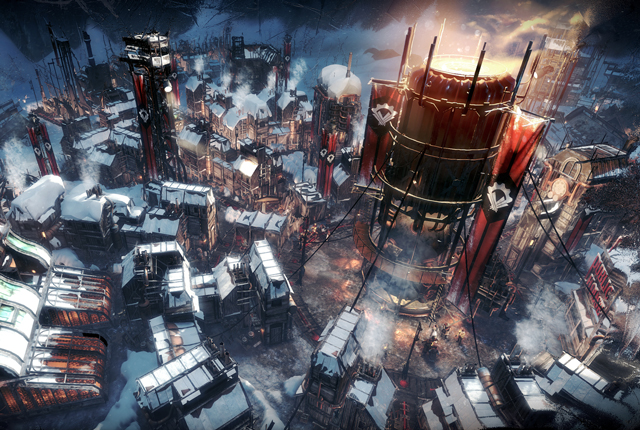


If you enjoy city-building games such as SimCity or Cities: Skylines but would prefer something with a more chilling premise, then Frostpunk is a game you should try – not least because it has a sequel coming.
To understand why you should be interested in Frostpunk’s sequel, you must first understand what made the first game so engrossing. So get your fur-coats and flasks of tea or coffee, and start asking those morally grey questions as we look at what makes this game tick.
City builders and goals
City simulation games all follow the same structural plan: you start with a single building or sum of capital and use it to build a settlement across an open sandbox.
The initial goal is to create something that doesn’t immediately burst into flames and is sustainable. Once we’ve achieved this noble goal, we usually do our best to emulate a capricious and thoroughly irritated Greek god by raining every potential disaster possible upon our unsuspecting city – because some people want to see the world burn and all that.
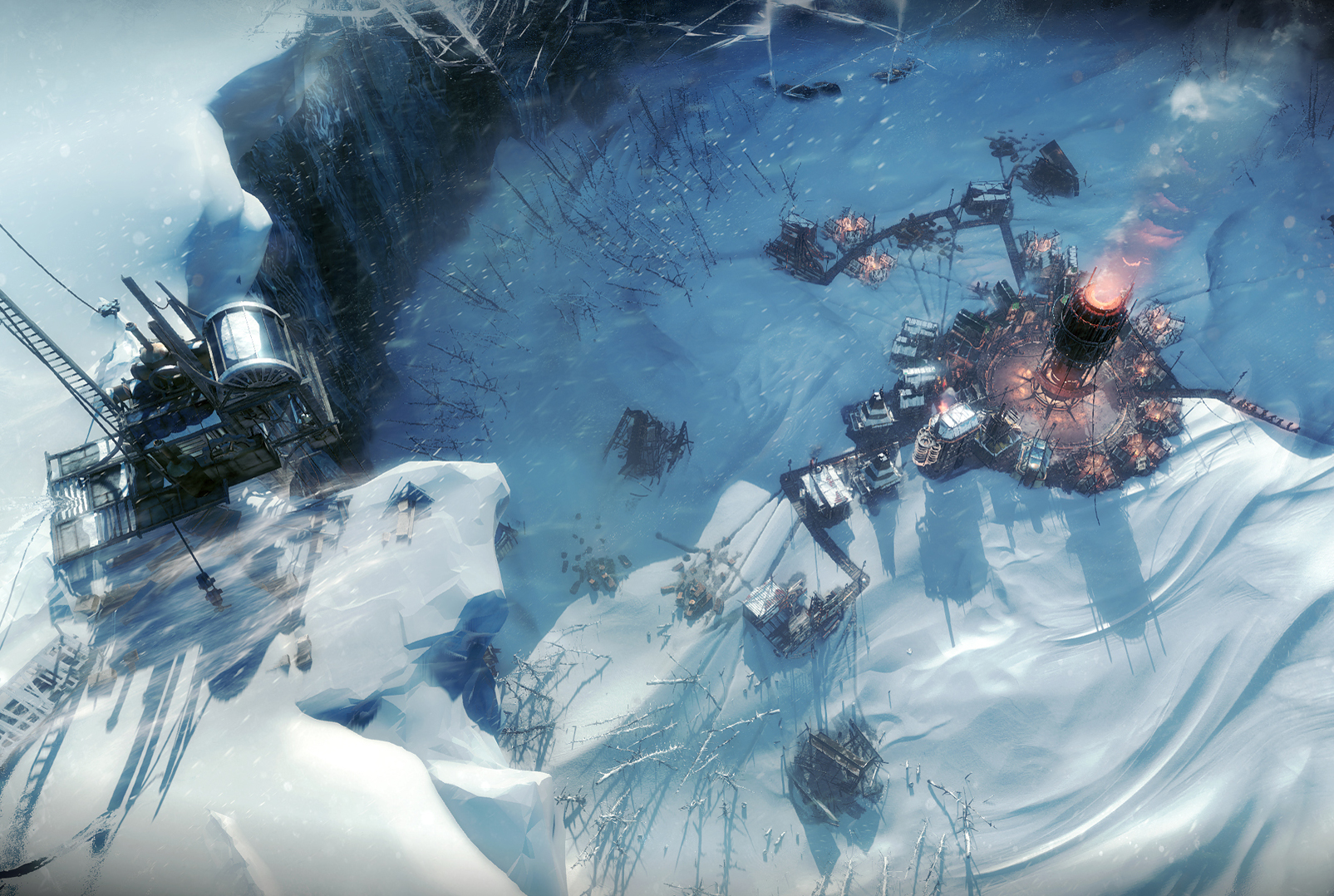
Frostpunk offers a more narrative-focused experience across several different campaigns where you work to achieve a specific goal or freeze trying.
Unlike other sims where you’re usually the cause of the world-ending disaster, Frostpunk puts you in a world where the disaster has already come, and it’s your job to keep the last embers of humanity alight.
This is a difficult task as the end of the world came not from fire or aliens but instead, the onset of another Ice Age, the implications of which provide the foundation for the core gameplay.
Gameplay
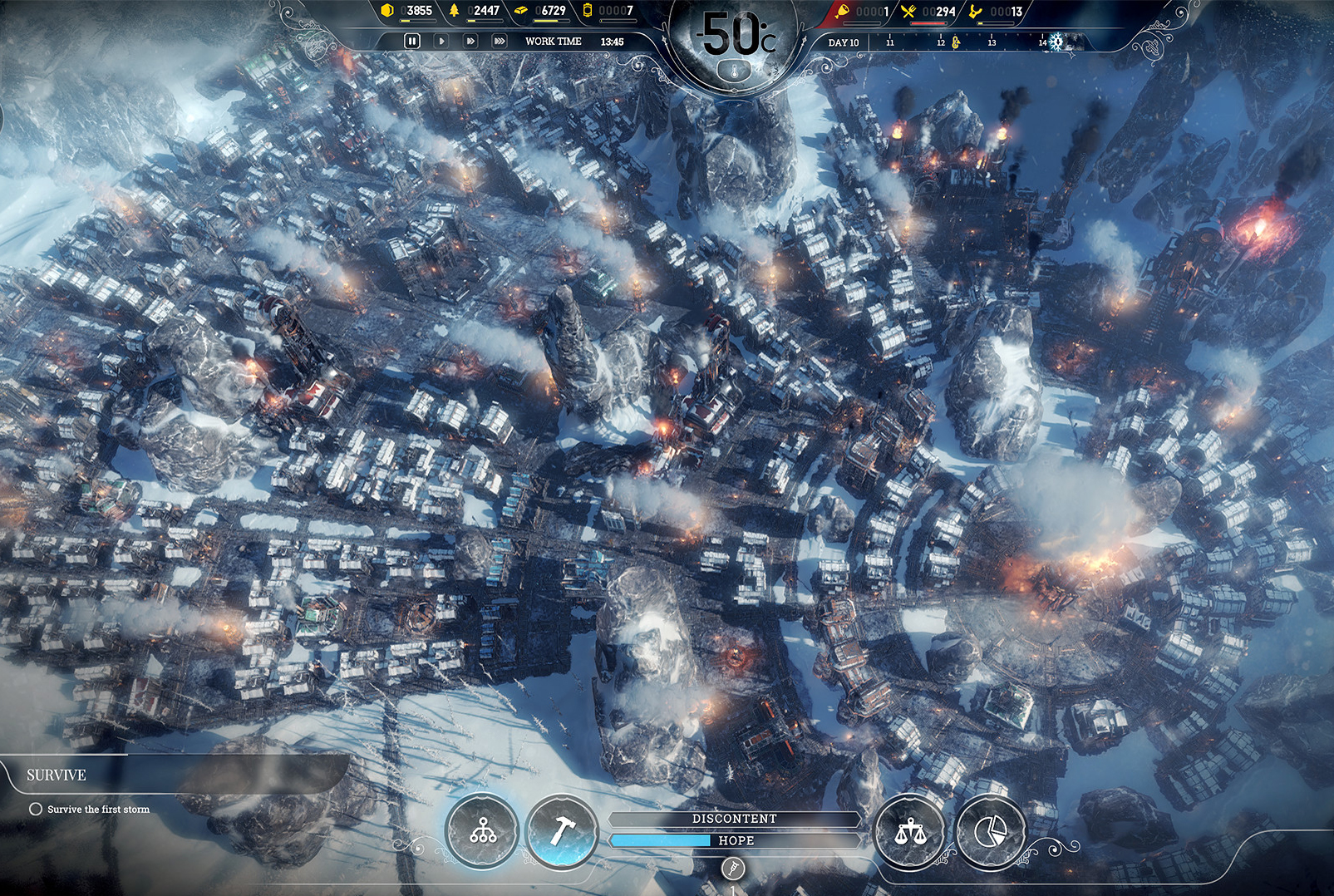
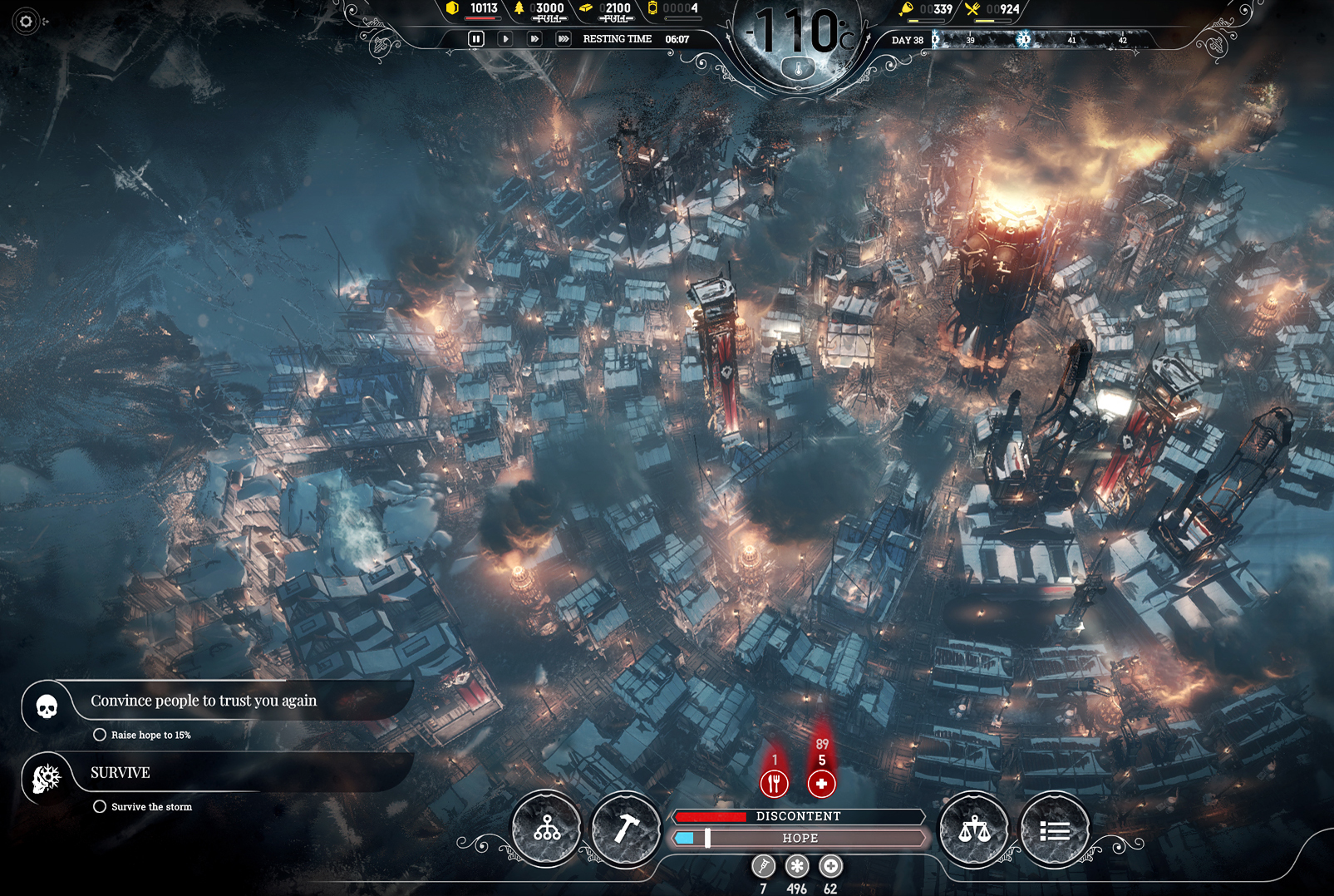
In Frostpunk, you start with one central building – an immense tower of iron that resembles a steam train which produces heat for your city. Without it, your people would freeze to death in a matter of days.
To keep the cold at bay, you’ll have to constantly feed this engine coal – a task made difficult due to an ever-increasing population and area that must be heated.
This is before you consider other issues beyond the cold – such as providing your people with housing, jobs and food, which all then influences their overall approval of you – their leader.
Approval is significant as if it falls too low, your game ends, and your people exile you into the tundra for your incompetence (no pressure).
The core gameplay of this city sim is therefore centred around careful resource management; you’ll never have enough to go around, so you have to make choices as to how best to handle the ever-increasing cold while balancing your supplies.
Along with this, every passing day, the temperature decreases, which adds to the task of keeping your people warm, fed and happy.
This is where the most exciting aspect of Frostpunk arises – the social simulation of what a post-apocalyptic society could look like.
Hard choices
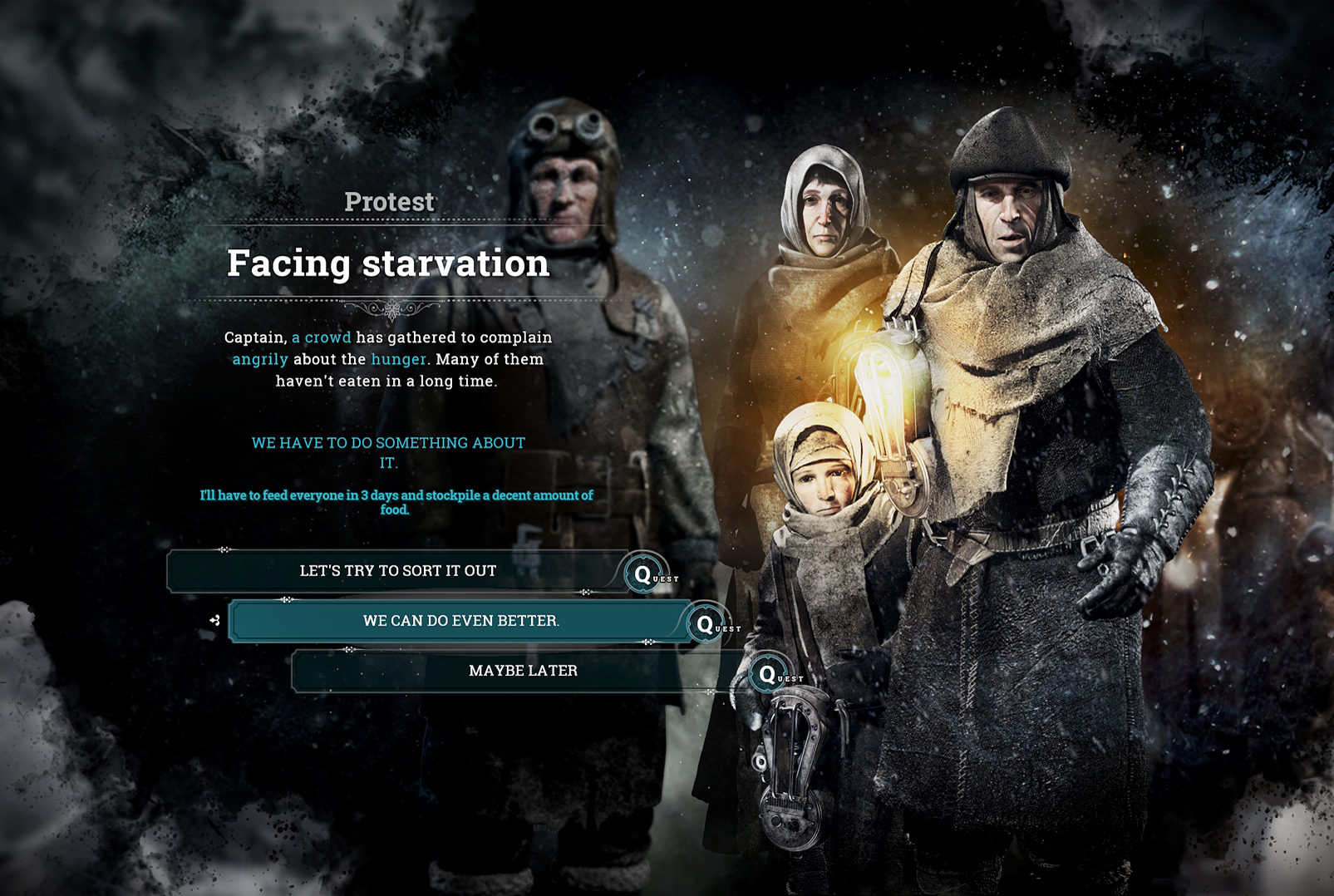
The world is a harsh place, and survival is not easy, so it’s up to you to ensure your people make it through each night.
You could hold onto your current moralities, choosing to rise above desperation to preserve your ethics but, on the other hand, what once would have been seen as morally wrong could now be a necessary evil that saves your city from its end.
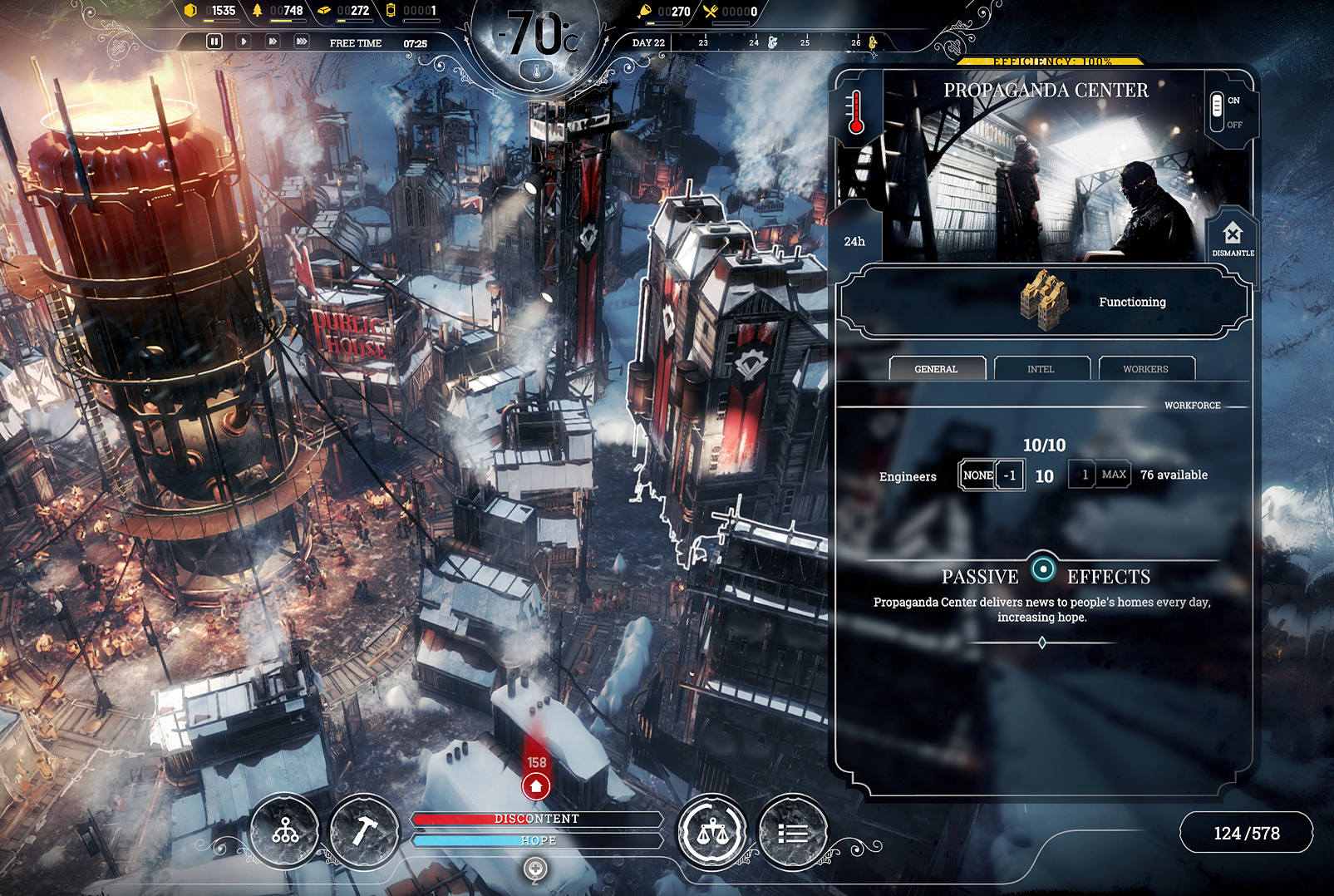
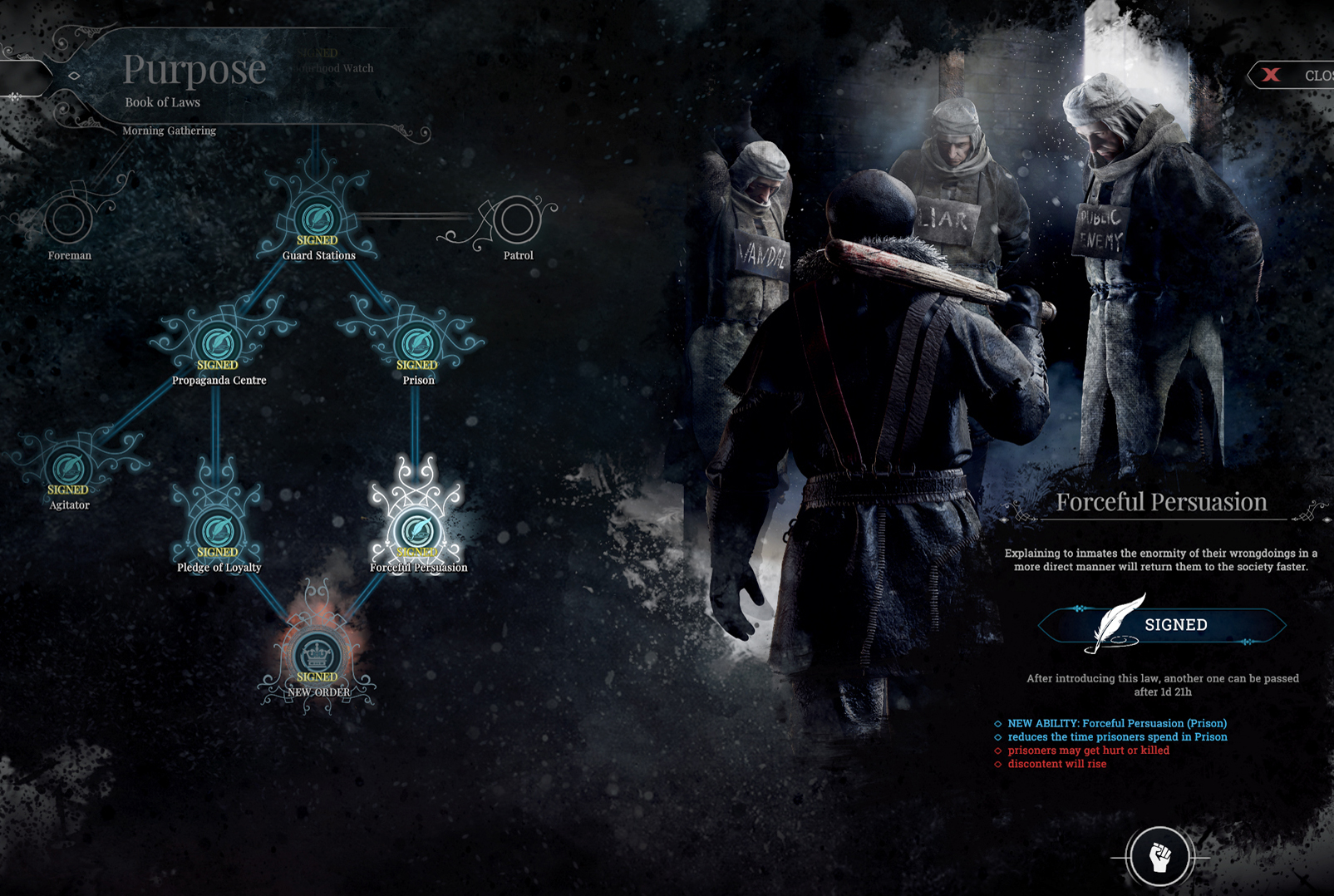
These choices take the form of laws that you can implement every few in-game days, providing access to new technologies, buildings, or options when your situation becomes dire.
The best example of this that comes to mind is the child labour law decision. It’ll happen early in your playthrough where you must decide what should be done with the children during the day while the adults are hard at work mining coal or hunting.
You can elect to have the children become apprentices in hospitals and engineering, safe working environments where no one will be hurt, and which will passively improve the efficiency of those buildings. Or you can fully implement child labour and put the youth to work alongside their parents in the mines.
At first glance, the right choice would seem straightforward, but you’ll likely be low on resources and have a limited workforce at this stage. Having a few extra hands to increase your coal reserve to see you through the night or acquire more food could be the difference between survival and death.
The laws you choose to implement, whether they’re based on morally questionable pragmatism or blind idealism, then shape what sort of city and society you eventually create.
This is the primary reason why Frostpunk is such a great game – it doesn’t just let you build a city but also challenges you, puts you in difficult positions, and allows you to play out the fascinating consequences of your choices.
It’s no surprise that Frostpunk received a BAFTA nomination.
What comes next
This brings us to one of the other reasons you might want to give Frostpunk a look – its sequel.
A sequel to a game this good, allowing the developers to improve and refine the original’s already-excellent gameplay and mechanics, will surely be a title to watch.
So, if you’re new to city builders, a veteran engineer or haven’t played Frostpunk before, there’s never been a better time to try out this excellent title.
After all, if you enjoy it, you’ll have more to look forward to.
The release date for Frostpunk 2 has not yet been announced.






 Loading ...