

Broad Media and MyGaming had the privilege of meeting with members of the University of Pretoria’s Department of Civil Engineering, who showed us several of their robotics and advanced technology products.
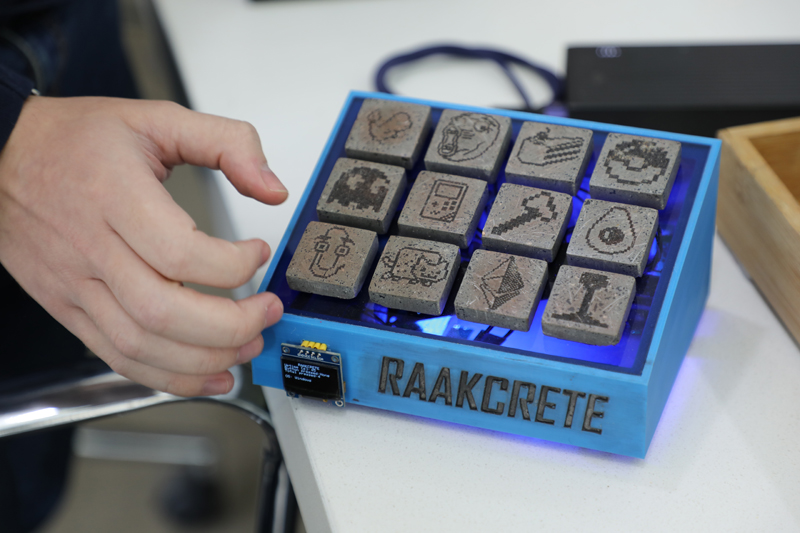
One of the projects presented to us included a concrete macro keyboard called the “Raakcrete,” which was built by Ph.D. candidate Andre Broekman.
Alongside its concrete keys, it is made from various other low-cost additive manufactured materials including molds and a printed body which are both 3D-printed.

The hardware used to operate the keyboard’s functions consists of a Raspberry Pi Pico microcontroller, a touch breakout sensor, and programable RGB LED lights for effect, while the visual graphics were laser-sintered using red oxide powder directly onto the concrete keys.

The total cost of the keyboard came to around R500 and Broekman’s motivation to build this keyboard was to automate computer tasks so that his life would be easier.
Potential applications
The Raakcrete itself is unlikely to be implemented within the gaming industry, but its human-computer interface technologies do have fascinating real-world potential.
For example, the breakout sensor used in the keyboard measures the change in capacitance when you touch the the concrete keys.
This touch-sensitive technology can emulate any keyboard input, including simple keystrokes or entire stings, and essentially allows you to have a matrix of touchpoints within any conductible material.
For gamers, innovations such as this enable future possibilities within the gaming industry such as desks with built-in gaming keyboards.
Currently, the cost of building something like this would be extremely expensive; however, it may become more affordable in the future.
Read: The future of hazardous data collection is here – and it begs for treats






 Loading ...