

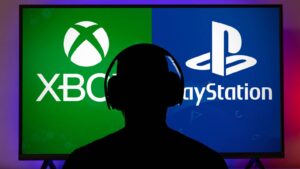
If you’re a gamer, you will no doubt have an intimate knowledge of PC vs. Console fanboy debates.
Each side claims their platform of choice is better than the other, and each has endless lists of reasons as to why consoles suck or PC gaming is dying.
The present
This is thanks to each platform having their own relative merits, though of late, previously drawn lines are starting to blur.
For instance, one of the strongest selling points of consoles in years gone by is the “pop in and play” nature of the games. There were no lengthy installs, no worries regarding hard drive space or minimum specification requirements. Your PS one game would play on any PS one within minutes.
Compare this to the rather large firmware update I had to install before firing up Killzone 2 on my PS3. This was followed by a factory reset on the PS3 because, for some reason, the game’s audio was stuck in Spanish – and I’m not Spanish.
Then you get the PC, with its ability to network allowing multiplayer games. PCs are also vastly more powerful and are capable of rendering massive environments and highly detailed graphics.
On the flipside, most modern consoles now have some form of multiplayer online, and quite a few PC titles which could be graphical masterpieces are held back as they were designed first for consoles, and then ported to PC.
It makes sense to steal features and ideas from your competition to make yourself more desirable, but it’s extremely hard to do this while retaining what makes your platform of choice unique.
In simple terms, manufacturers are diluting their core features to try and compete for market share.
With the advent of increasingly capable smartphones, mobile computing faced this same problem. They had a gap between smartphones and laptops, and it took the creative mind of Steve Jobs and Apple to come up with a solution – the iPad.
With iPad sales topping 9.5 million in the last quarter alone, there is no doubting the tablet PC’s success. So why can’t we have a similar middle ground offering on the gaming market?
The future
The device I would suggest as the solution to end the PC vs. Console debate would look much like the consoles we have now, albeit slightly larger.
It would be built to the same standard as consoles of years gone by, where as long as the hardware remains constant, there would be no need for firmware updates or patches.
The only difference to the basic idea of a console would be upgradeable components.
Unlike PC’s though, you wouldn’t have a range of different CPUs from more than one hardware supplier; you would have a single CPU provided by one supplier. This would replace the CPU currently in your PS3 on Xbox 360 in the same plug-and-play way that PC CPUs work.
The benefit is the CPU can follow the original design plans of the next console to integrate perfectly.
Designers would know all the variables the CPU has to deal with, such as which cooler the CPU will make use of and the abilities of the chipset it will plug into. Something similar could happen with the GPU.
What manufacturers could plan is a 2 year upgrade cycle where every second year a new CPU is released for the console extending its capabilities, the same thing is possible with the GPU, hard drives and RAM.
The result
This new PC-console hybrid would have the best of both words and would be a truly gaming orientated device. Gamers would benefit from the plug-and-play style of consoles, and would be able to keep up with technology.
Developers could really go to town with the design of new games knowing that consoles and PCs alike will have the ability to process the latest software technology.
PC gamers wouldn’t have to deal with console-tarded ports that are lacking in graphics, UI or gameplay. Everyone wins.
But if such a device existed, who would still use a console or a PC? Why deal with a console with a limited lifespan; a system where developers couldn’t push the boundaries of what is possible?
Why invest in a gaming PC when this new super console can handle games just as well, and you can do everything else you would normally do with a much cheaper desktop PC, or for that matter, a laptop or tablet PC?
The issues
There are a fair number of issues a would-be manufacturer would have to solve before such a device could exist.
Cost would be one factor; they would have to make the console slightly cheaper in the beginning and limit the cost of a combined CPU and GPU upgrade to just under what a mid range PC upgrade would cost now.
They would also have to set up a global installation network to make sure users don’t void the warranty by installing the hardware themselves. Another way would be to limit which games work on the console after the upgrade.
One way would be for all current generation games to function perfectly fine on the current hardware, whereas games released after the hardware update will only work if the new hardware is detected.
Issues aside, I’m pretty sure a dedicated gaming super system could work. Such a system would easily match the venerable PS2’s 10 year plus lifespan, and gamers would enjoy a more complete gaming experience.




 Loading ...