
The next generation of graphics cards from AMD is here, and offers gamers the best performance possible in their respective classes.
The daddy-O of the series is the HD7970, and AMD has been kind enough to send MyGaming a review unit. Is it the best card currently on the market? Yes, here’s why:
Technology overview
The HD7970 is the top range card of the HD7900 series, aimed at gamers who want the best performance possible and don’t care about the cost. The list of features includes being based on Graphics Core Next (GCN) architecture, HDMI 1.4a and DisplayPort 1.2 ports, and PCIe 3.0 interface support.
Being an HD7900 series card, the HD7970 ships with all the new technology AMD has to offer, including Eyefinity 2.0. The latest version of EyeFinity supports up to 4k resolution displays over one output port, has intelligent bezel correction, and can split independent video and audio streams to selected monitors and more. For a full look at Eyefinity 2.0, read the Mygaming EyeFinity 2.0 overview.
The HD7970 also features ZeroCore technology. This is a power saving feature that allows the card to draw less than 3w during a long idle state when the computer is on, but not powering a monitor. Also present is intelligent power management for multi-graphics card setups. While working in a 2D environment, only the primary graphics card draws its normal amount of power, the rest are put into a long idle state. For more on AMD ZeroCore, read the Mygaming ZeroCore Overview.
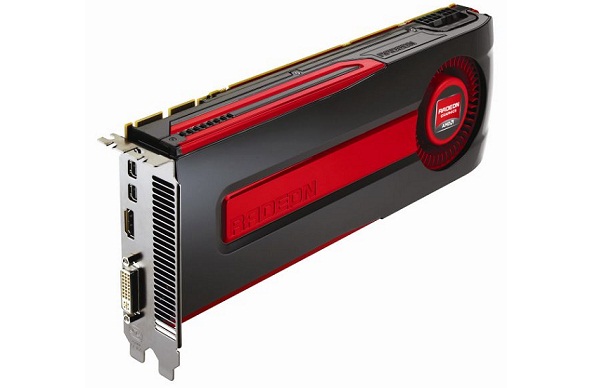
7970 front angle
Performance
Metro 2033
Known as the new Crysis, Metro 2033 is one of the most demanding games on your hardware currently available. We played through a set level three times, and recorded the average frame rate of the level using Fraps. These averages were then averaged to get the result below. All graphics settings were maxed, while tessellation was turned off. The resolution was 1920 x 1200.
Scores:
- GTX570 – 24.5fps average
- HD6950 – 25.9fps average
- HD7950 – 35fps average
- HD7770 – 19.7fps average
- HD7750 – 14.2fps average
- HD7970 – 40.4fps average
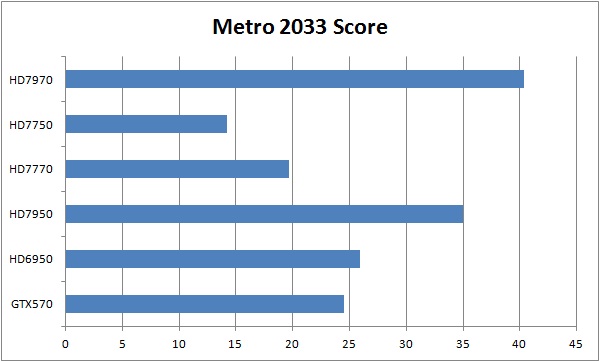
Metro 2033 scores
Unigine heaven
First up for the Synthetic benchmarks is Unigine heaven, a DirectX 11 benchmark that focuses on a variety of methods to stress modern graphics cards. We made use of the HWbot Xtreme DX11 pre-configured settings during testing, and the benchmark was run three times on each card, with the upper and lower samples disregarded.
Scores:
- GTX570 – X1257.93
- HD6950 – X885.89
- HD7950 – X1406.308
- HD7770 – X750.41
- HD7750 – X582.45
- HD7970 – X1879.34
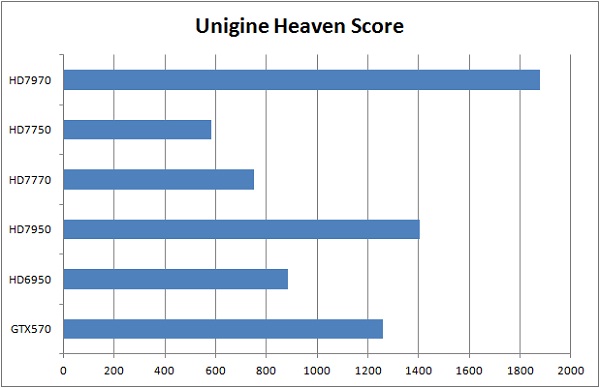
Unigine Heaven scores
Trackmania
The now outdated DirectX 9.0c standard is often ignored in modern benchmarks, and for good reason. The standard is almost completely irrelevant for modern gamers, though as a quick and easy indication of real world performance for those who (like me) still enjoy the occasional classic title, so it was added in for good measure. Tests were run at 1920 x 1200, with all graphics settings maxed out, and AA set to 16x.
Scores:
- GTX570 – 87.3fps
- HD6950 – 65.8fps
- HD7950 – 78.2fps
- HD7770 – 50fps
- HD7750 – 45.5fps
- HD7970 – 85.1fps
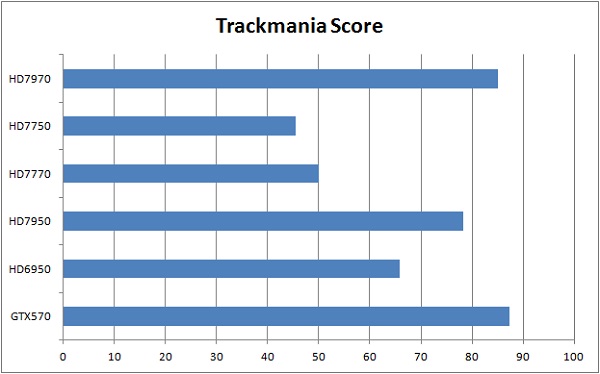
Trackmania scores
3D Mark Vantage
3D Mark Vantage is still one of the best synthetic benchmarks to compare current generation graphics cards. While there are still a host of DirectX 10 titles on the market, performance in this segment will remain relevant.
Scores:
- GTX570 – 25481
- GTX570 – 20719 physics off
- HD6950 – 20630
- HD7950 – 22804
- HD7770 – 14365
- HD7750 – 11408
- HD7970 – 24712
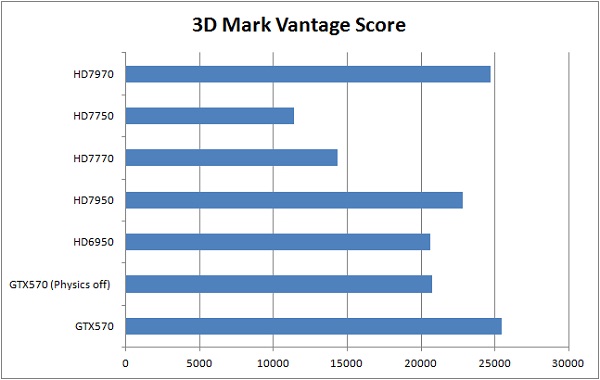
3D Mark Vantage Overall scores
3D Mark Vantage GPU
Scores:
- GTX570 – 21661
- GTX570 – 21657 physics off
- HD6950 – 21511
- HD7950 – 25845
- HD7770 – 13441
- HD7750 – 10114
- HD7970 – 28172

3D Mark Vantage GPU scores
Conclusion
There is no doubt that the HD7970 is the new performance king, offering the highest scores of any graphics card available today.
Impressive performance aside, the cost of a HD7970 is a major barrier, putting the card out of reach of all but the high-end enthusiasts who are able (and willing) to pay over R6,500 for a single PC component.
To sum up the AMD HD7970: it’s a powerful, feature rich card which keeps noise and power consumption low, and framerates high. If you can afford it, there is no better card to get.
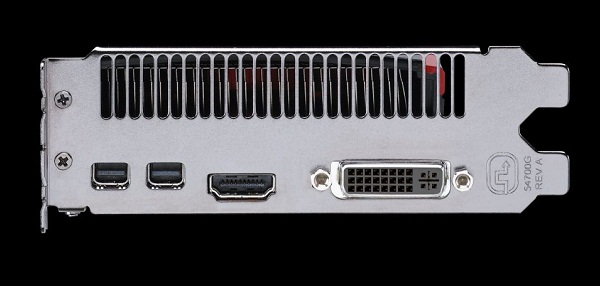
7970 rear ports
Related Articles
AMD Eyefinity 2.0 technology detailed
AMD ZeroCore technology explained
AMD Radeon HD7850, HD7870 SA pricing and availability confirmed






 Loading ...

Guys you should keep in mind the overclocking potential of this card. It runs at amazing temps and the core clock design behind this card gives it a huge benefit where overclocking the GPU past the GHZ mark can be accomplished without any aftermarket cooling.
Also keep in mind that while Nvidia go for speed, they’re temps won’t be as good. Their cards are always hotter.