



We agree, we’ve talked enough about Intel’s Core i7-6700K “Skylake-S” CPU, most recently when an intrepid overlocker managed 6.5 GHz with liquid nitrogen.
The problem is that the i7-6700K continues to impress, and it’s gone and done it again.
The fact that the 14nm Skylake CPU is faster than the 22nm Devil’s Canyon i7-4790K is fairly established, but what about when it takes on much bigger opponents, like the much loftier i7-5820K.

The Core i7-5820K “Haswell-E” is more expensive than even the i7-6700K, and for good reason.
Coming in at around $50 more than the upcoming i7-6700K, the i7-5820K is part of Intel’s High-End Desktop (HEDT) range, and easily one of the most capable Haswell chips you can buy.
It sports 6 fully unlocked, Hyper-threading enabled cores, which means 12 threads – that’s 4 more than the i7-6700K has.
On top of its increased core/thread count, the i7-5820K has 15 MB of L3 cache, a clock speed of 3.3 GHz and a clock speed boost of 3.6 GHz.
What that means is quite a bit more compute power, so does the i7-6700K’s microarchitectural improvements make up the difference? Let’s find out.
According to WCCF Tech, a source has benchmarked and compared the i7-6700K “Skylake-S”, i7-4790K “Devil’s Canyon”, i7-5820K “Haswell-E” and Xeon-based E3-1231 v3 “Haswell” in a number of tests, and we’ve got the results for you.
But first, the credentials of the contestants:
| Category |
Intel Core i7-6700K |
Intel Core i7-5820K | i7-4790K | Intel Xeon E3-1231V3 |
|---|---|---|---|---|
| Codename | Skylake-S | Haswell-E | Devil’s Canyon | Haswell |
| Process | 14nm | 22nm | 22nm | 22nm |
| CPU Cores | 4/8 | 6/12 | 4/8 | 4/8 |
| Graphics | Intel 530 | N/A | HD 4600 | N/A |
| Base Clock | 4.0 GHz | 3.3 GHz | 4.0 GHz | 3.4 GHZ |
| Turbo Boost | 4.2 GHz | 3.6 GHz | 4.4 GHz | 3.8 GHz |
| L3 Cache | 8 MB | 15 MB | 8 MB | 8 MB |
| Unlocked Design | Yes | Yes | Yes | No |
| TDP | 95W | 140W | 88W | 80W |
| Launch Price | $350 | $398 | $339 | $250 |
Just keep in mind that Windows 10 promises to make much better use of additional CPU cores and available threads, meaning that benchmarks and games coded specifically for Windows 10 and DirectX 12 should change the results in favour of the i7-5820K somewhat.
Now that we’ve gotten that out of the way. First up, the CPU-centric benchmarks.
Intel Core i7-6700K CPU Performance Benchmarks
-
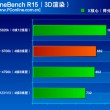
- Cinebench R15
-
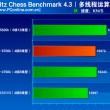
- Fritz Chess
-

- PhotoShop CC
-

- TMPGEnc
-

- Winrar
-

- wPrime
As you can see, while the i7-5820K offers an advantage in a benchmark or two, the i7-6700K’s microarchitectural improvements, along with its Z170 chipset, make for noticeable performance gains.
They’re far from massive, but we weren’t expecting that, especially from very similar clock speeds.
And now what you’re really here for, the gaming benchmarks.
Intel Core i7-6700K Discrete Graphics Gaming Benchmarks
-
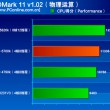
- 3DMark 11
-
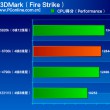
- 3DMark Firestike
-

- Far Cry 4
-

- GTA V
-

- Metro 2033
-

- Project CARS
-

- Sleeping Dogs
Synthetic benchmarks almost always take advantage of additional cores, offering higher performance scores to CPUs with more compute power.
Real-world benchmarks, however, also known as games we actually play, aren’t optimised quite as well and favour faster clocks and more efficient architectures.
So, we’re not at all surprised to see the i7-5820K pull ahead in 3DMark ’11 and Firestrike. In gaming environments, the opposite is true, and the i7-6700K is definitely the CPU to get.

Good job Intel. Now if only we could afford one. $350 is hardly cheap.
Source: WCCF Tech
More Intel news
Meet 3D Xpoint Memory: it’s 1000x faster than conventional SSD memory
i7-6700K reaches 6.5 GHz with liquid nitrogen: crushes i7-4790K in synthetic benchmarks
Intel delay their next-gen 10nm chips: Moore’s Law shaky at best






 Loading ...

Why don’t we do an overclocked comparison? I know people like to do stock clocks for a repeatable test, but who buys a ‘k’ processor and DOESN’T overclock?
From what I’ve seen, the overclocked CPUs are VERY close together in gaming, but the 5820k ends up being even faster for other tasks that actually take advantage of the cores.