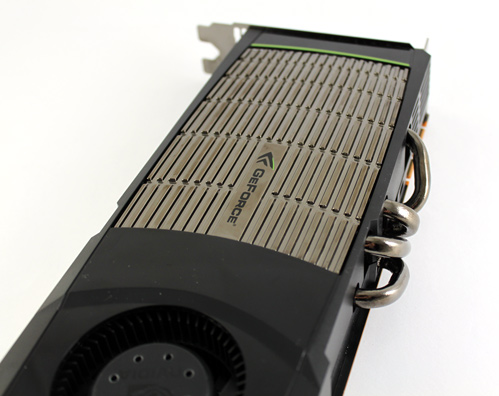
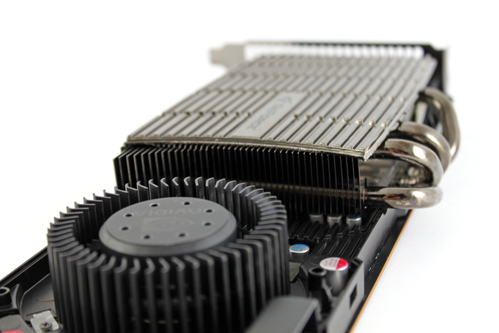
Firms, perhaps, but a massive portion of the CG industry's high-level producers are actually freelancers and need home computing power. Even if the TDP is very high, that doesn't mean that they won't be willing to adopt specialized cooling solutions or very 'deep' cases for the cards if it means that they can get a better process/watt efficiency than on the GTX295, and don't have to shell on the current Tesla cards.
Ultimately, even with a reduction in cores per chip, the total combined performance for GPU-based parallel processing purposes still far exceeds what the GTX295 part is able to do; the GTX295 which uses two cores on one card at a fabrication process of 55nm as opposed to 40nm, and at 480 cores the card still comes in at the same total cores per part as the GTX295 after combining its two cores.
The main performance benefit, to my knowledge, comes in the massively improved memory controllers the cores use and how they utilize the memory and caches on the whole. In a parallel processing environment where you're working with hundreds of thousands of small chunks of information being processed that need to be pieced together, on-chip memory access throughput as well as latency and cross-referencing of data becomes the ultimate bottleneck, as the cores themselves manage to far exceed the processing throughput the memory is able to handle.
Gaming performance wise, as most consumers can barely afford a GTX285, let alone a GTX295, not to mention cards such as the HD5970, the GTX480 and GTX470 should ultimately replace the GTX295 entirely, if they are able to at least match, when not exceed, its gaming and/or processing performance.
This because on a dual-gpu card, obviously, if one gpu and its associated pipelines/memory chips has to break, the card as a whole ultimately breaks down, and costs the manufacturer more to repair or replace as necessary when still under warranty. The Fermi based cards, obviously, not only use a cheaper to manufacture part, but only use a single unit of it, and as such is cheaper to repair or replace, again as necessary.
To my knowledge it has been in discussion among computer part manufacturers for a long time to adopt more dual-sided design profiles for add-in cards. If the TDP remains at an unmanageable level, we just may see these cards either evolve into such dual-sided products, splitting a single core into two parallel-mounted cores with a direct bus connection, allowing for cooling on both sides of the card, or we may ultimately see them opting to split the single parts into two separate parts, as seen on the GTX295/HD5970, at least until they are able to figure out a way to better cool the cards or get the components to run cooler as a whole.


 Looks like we will have to wait until 1am - 2 am tonight