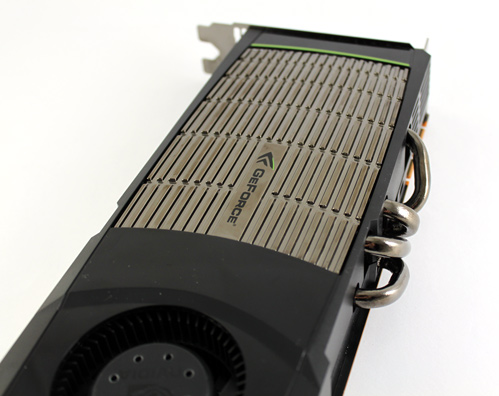
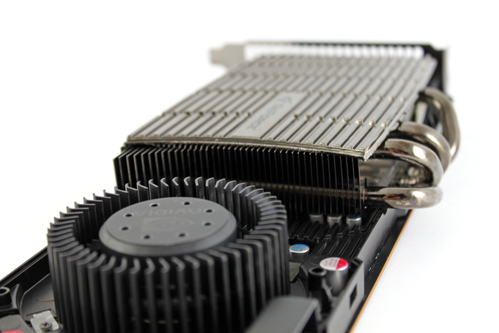
Fermi real-world benchmarks surface, and the results may surprise you.

Even though these cards pwn so badly, theres no point getting the best card all the time, cuz right now even a GTX 260 u can run everything high anti alias ect, and there will be no lag at all. Value for money rather get that and then u got enough room to upgrade later on, only thing that really bugs me with the high end cards is that it makes so much noise.... Unless u really like the noise and u can show ur friends that ur pc can take on satan himself.
 
Even though these cards pwn so badly, theres no point getting the best card all the time, cuz right now even a GTX 260 u can run everything high anti alias ect, and there will be no lag at all. Value for money rather get that and then u got enough room to upgrade later on, only thing that really bugs me with the high end cards is that it makes so much noise.... Unless u really like the noise and u can show ur friends that ur pc can take on satan himself.


lo true but we need the high end cards or else the midrange cards will just get more expenses. Ill wait for some proper reviews from different sites
 
@Weasley, definitely.

Those benchmarks all conveniently show Substantial performance gains over the HD5870. What happened to the rest? Surely a benchmark wouldn't only use 2 games. But if ALL games show this trend, then Nvidia's pricing is justified (and they can reclaim there single-GPU Crown). If not, well... let's just wait and see.
 
@Weasley, definitely.

Those benchmarks all conveniently show Substantial performance gains over the HD5870. What happened to the rest? Surely a benchmark wouldn't only use 2 games. But if ALL games show this trend, then Nvidia's pricing is justified (and they can reclaim there single-GPU Crown). If not, well... let's just wait and see.

The "benchmark" is from "arabhardware.net", a real trustworthy source... right... Seriously, almost any other card or a day after release and no one would have even raised an eyebrow for their almost guaranteed to be fake bench.

We'll get our proper benchmarks by reputable sites a few days after release, with a thorough breakdown of games, resolutions and anti aliasing, just need to be a little more patient.
 
Even though these cards pwn so badly, theres no point getting the best card all the time, cuz right now even a GTX 260 u can run everything high anti alias ect, and there will be no lag at all. Value for money rather get that and then u got enough room to upgrade later on, only thing that really bugs me with the high end cards is that it makes so much noise.... Unless u really like the noise and u can show ur friends that ur pc can take on satan himself.
Wrong! What about STALKER: Call of Pripyat and Dirt 2?
 
The funniest thing is that even though the Single-GPU performance of the GTX480 is impressive, with the ridiculous TDP of 295Watts it is unlikely that we will see a Dual-GPU Fermi anytime soon (if ever) as this would require +- 500Watts (if they down-clock and enhance efficiency) which is simply impossible on the standard 1x6pin, 1x8pin PCi-e power connectors. You would need a 2x8pin, 2x6pin for single GTX480X2 (completely hypothetical).

So I don't see the Dual-GPU HD5970 being dethroned too soon.
 
Last edited:
I guess a lot of you don't realise that a large portion of nVidia's original intent with these cards is for high performance computing tasks. They're even planning on essentially replacing the previously purpose-specific Tesla (read: these cards have no video-out ports on them at all) products with the GTX400 series entirely.

I, for one, am among the target-market for these cards, as I have practical use for CUDA. The closest ATI has to it is their stepping into the DirectCompute realm, and adoption for that in development for the software pipelines I in particular need to make use of is still 'on the drawing board', in most cases.

Personally I'm looking forward to what the Fermi can do, since for what I would need it for, it can only be better than even the GTX295 is able to provide, on the GTX470, nevermind the GTX480.

*edit* Physx (I make use of this outside of games) is another thing that the ATI cards can't provide me with, leaving my CPU to do all the work. My CPU which would be better utilized performing other tasks at that time.
 
@Pollynator:

The GTX480 now has a reported TDP of 250W as reported by fudzilla (Which is still WAY too high).

@nanonyous:

The high TDP of Fermi has caused many HPC firms to drop their plans on utilizing it. (Not that there were many to begin with.)
The GTX400 series is crippled in respect to the 480SP (GTX480), whereas Nvidia have salvaged the 512SP Fermi parts for use in their Tesla boards (If they're still calling it Tesla).
 
Firms, perhaps, but a massive portion of the CG industry's high-level producers are actually freelancers and need home computing power. Even if the TDP is very high, that doesn't mean that they won't be willing to adopt specialized cooling solutions or very 'deep' cases for the cards if it means that they can get a better process/watt efficiency than on the GTX295, and don't have to shell on the current Tesla cards.

Ultimately, even with a reduction in cores per chip, the total combined performance for GPU-based parallel processing purposes still far exceeds what the GTX295 part is able to do; the GTX295 which uses two cores on one card at a fabrication process of 55nm as opposed to 40nm, and at 480 cores the card still comes in at the same total cores per part as the GTX295 after combining its two cores.

The main performance benefit, to my knowledge, comes in the massively improved memory controllers the cores use and how they utilize the memory and caches on the whole. In a parallel processing environment where you're working with hundreds of thousands of small chunks of information being processed that need to be pieced together, on-chip memory access throughput as well as latency and cross-referencing of data becomes the ultimate bottleneck, as the cores themselves manage to far exceed the processing throughput the memory is able to handle.


Gaming performance wise, as most consumers can barely afford a GTX285, let alone a GTX295, not to mention cards such as the HD5970, the GTX480 and GTX470 should ultimately replace the GTX295 entirely, if they are able to at least match, when not exceed, its gaming and/or processing performance.

This because on a dual-gpu card, obviously, if one gpu and its associated pipelines/memory chips has to break, the card as a whole ultimately breaks down, and costs the manufacturer more to repair or replace as necessary when still under warranty. The Fermi based cards, obviously, not only use a cheaper to manufacture part, but only use a single unit of it, and as such is cheaper to repair or replace, again as necessary.

To my knowledge it has been in discussion among computer part manufacturers for a long time to adopt more dual-sided design profiles for add-in cards. If the TDP remains at an unmanageable level, we just may see these cards either evolve into such dual-sided products, splitting a single core into two parallel-mounted cores with a direct bus connection, allowing for cooling on both sides of the card, or we may ultimately see them opting to split the single parts into two separate parts, as seen on the GTX295/HD5970, at least until they are able to figure out a way to better cool the cards or get the components to run cooler as a whole.
 
How do the new cards perform with some of the cores disabled, does it create a huge discrepancy with the last slew of benchmarks? Only local cap available at work at the moment...
 
On the whole, the HD5970 (not 5980) is still taking a notable performance lead in a lot of games at the highest resolutions, specifically 2560x1600. Once AA gets turned up though, in a lot of the cases, the difference in performance is more expressed as the GTX480 takes a significantly smaller hit in performance.

Tessellation-wise, the HD5970 is in the lead when it comes to what essentially amount to 'real world expectations' for tessellation implementation within games, while cranking up the tessellation levels, again, shows that the GTX480 is able to take a significantly smaller hit to performance.

Worth noting is that the GTX480 generates less heat and apparently less noise than a HD5970, but consumes more power - quite a lot more, from what I could tell - usually ranking in the region of 30-40watts more when under heavy strain.


Very important to note is that the only review I've gone over so far is the THG one, and they, to my knowledge, kept hardware based PhysX disabled for all their tests. On the whole that shouldn't necessarily be a performance breaker since they were using a Core i7 980 Gulftown (the 6-core Nehalem) in the system, but it may have been having a pretty heavy impact on performance in some of the game benchmarks.

Haven't seen a review going over its directcompute/cuda performance yet :(
 
How do the new cards perform with some of the cores disabled, does it create a huge discrepancy with the last slew of benchmarks? Only local cap available at work at the moment...

The previous leaked banchmarks appear to agree with those from Fudzilla, specifically the Far Cry 2 , Dirt 2 Benchmarks.

EDIT: New Info:
GTX480 - Now with built-in Bread Warmer!
hladnjak-1-small.jpg

ventilator-small.jpg


That metal part is in physical contact with the Heatsink!

And with the idle temp at 65C, and load at 97(!) you could even brew a cup of tea!!! Or cook an egg!!
 
Last edited:
The Club3D 9800GT 1Gb Green Edition easily reaches temperatures as high as 100c, using a single-slot cooler. This is in large part due to poor cooler design however, as convection based cooling plays a MASSIVE part in keeping components such as graphics cards cool.

If you had to lay a PC using one of these down on its side and invert the CPU fan to draw air upwards instead of force it onto the CPU, with good ducting to ensure maximum airflow over the fins of the heatsink, you can easily achieve significantly better cooling performance for just the CPU, and a bit better for this card.

If you had to stand a PC on its 'face', with the 'back' of the computer pointing into the air; well, all the hot air rises up straight out of the back of the case, and cool air is drawn from the bottom of the case by airflow caused by a pair of fans, and/or hair-dryer styled coolers as seen on the GTX480.

Personally I have my computer standing inside a cupboard in a similar fashion to the latter situation, and even during the summer, if I keep the door open, the system runs cool enough even when overclocked that I never run into stability issues; this using stock cooling.
 
The previous leaked banchmarks appear to agree with those from Fudzilla, specifically the Far Cry 2 , Dirt 2 Benchmarks.

EDIT: New Info:
GTX480 - Now with built-in Bread Warmer!
hladnjak-1-small.jpg

ventilator-small.jpg


That metal part is in physical contact with the Heatsink!

And with the idle temp at 65C, and load at 97(!) you could even brew a cup of tea!!! Or cook an egg!!

Yeah well, multipurpose hardware for the WIN! :D
Now I can game and make breakfast at the same time :p
 
The Club3D 9800GT 1Gb Green Edition easily reaches temperatures as high as 100c, using a single-slot cooler. This is in large part due to poor cooler design however, as convection based cooling plays a MASSIVE part in keeping components such as graphics cards cool.

My Geforce 7800GS (yes , very old, ancient even) only ever reached 100C when its fan stopped spinning, removing the obstruction saw the temp plummet back to its usual ~57C idle temp. Under load it reaches 70-75C max.

Anyway, The GTX480's cooler works. Its a much higher power cooler, for a much higher power GPU. The problem lies with the GF100 chip, the GTX470 (with lower specs, under less strain), which has a much more standard cooler, remains relatively cool compared to the GTX480.


Yeah well, multipurpose hardware for the WIN! :D
Now I can game and make breakfast at the same time :p

Nice one. If you had two in SLI you could open up your own Coffee Shop!:D
 
Last edited:
You'll run into cooling issues like that anytime you put so many active 'processors' into a single core. It's worth keeping in mind that the GTX285 and HD5870, and GTX295 and HD5970, for comparison's sake, are both essentially a case of 1:2 ratios.

One card has, for example, 200 'real world cores' on a single chip, while the other has literally double that between two.

Heat management when you can separate the two cores and spread their heat more evenly over a heatsink is far simpler than when you have a single chip that's pushing the same amount of cores as would have previously been in two separated chips. But as you said, the GTX480 cooler does ultimately work, and it's not even spreading out heat to the back of the card like it technically could do.

Many cases, the Coolermaster Elite 342 as an example, have a phantom backpanel slot that's above where your PCI-E would be anyway. Chances are good it's intended to be used by a PCI-E 1x slot on many motherboards, but when you begin looking at throwing a card as fat as this into it, one could argue that that slot could be used for a back-mounted portion of the cooler (even if after-market) so that you have double the outgoing airflow by slapping a fan onto the other side of the card as well.

For those of you that haven't noticed, the PCB itself has holes behind the fan on the GTX480 so that it can draw in air from the other side of the card into the hairdryer-styled cooler. :P End of the day, lots that could be done with aftermarket cooling for the card; nVidia just had to put it out there with a reference cooler that works out of the box for re-distributors to work with.
 
Back
Top