

Over the years and while playing various challenging games – usually of the Souls genre – I’ve had many conversations with friends about difficulty.
Saying the Souls games are challenging and difficult is a redundant statement, to say the least, as they are well known to be difficult.
However, there is something to be said about the type of difficulty – more specifically, the difference between artificial difficulty and a genuine challenge.
Challenge vs artificial difficulty
At first glance, most hard games all seem the same – they all have enemies that can take one or two-shot you, areas that are hard to navigate and a steep learning curve.
While this is true, there are differences between challenging games and games with artificial difficulty that determine whether the difficulty of the game enhances the experience or detracts from it.
Let’s first start with a challenge.
Challenge refers to an experience that tests your skills and abilities to adapt and learn, but never feels like it’s unfair or imbalanced.
An excellent example of this is the Nameless King in Dark Souls 3 during his second phase after you’ve defeated the King of the Storms and the King battles you on foot.
The fight is hard – the Nameless King hits hard, has a fast move-set, and one mistake can quickly lead to you getting slaughtered on the edge of his swordspear.
However, this fight never feels unfair. At no point during the fight, though irritated and annoyed you may be at dying, does it feel like the game cheated you.
You died because you rolled the wrong way, got greedy, or weren’t paying attention.
It’s an organic experience that requires you to learn the boss, and when you have and eventually defeat him, the satisfaction you feel is second to none.
Artificial difficulty is entirely different.
Rather than creating a fair and challenging situation, the artificial difficulty relies upon numerical and direct methods of increasing the challenge.
For example, artificial difficulty wouldn’t make a boss’s move set more complex and rewarding, but would instead increase its health or damage.
Likewise, rather than creating an exciting area with unique features that make it challenging to traverse, artificial difficulty would instead fill the area with more enemies.
It makes the game harder, but not in a way that makes it more satisfying to beat.
When you die to artificial difficulty, it usually feels unfair and unsatisfying as you may have done everything correctly, yet still died.
An excellent example of these two different types of difficulty can be found when comparing Dark Souls 1 and 2.

Dark Souls 1 vs 2
Dark Souls 1 and 2 are quite old, so their graphics are outdated compared to the current standard, and their controls feel sluggish.
However, even when compared to more fluid modern games, Dark Souls 1 never feels unfair.
You may grow angry when you die or lose souls, but for the most part, the game presents a manageable challenge where enemies and areas have been carefully crafted to test you but never leave you feeling cheated.
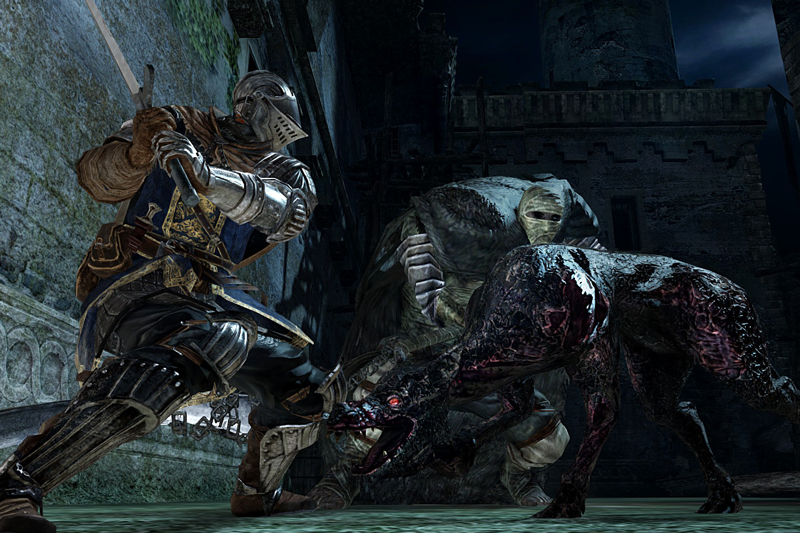
Dark Souls 2, however, took a different approach to creating difficulty and, rather than crafting more balanced encounters, favoured quantity.
Each area is filled with enemies, often of the same type and with little variety or complimentary move sets, and the challenge comes from dealing with a horde of opponents.
Even when you manage to make your way through the area successfully, it isn’t satisfying as much as a relief to put it behind you.
Artificial difficulty is lazy
It is worth noting that artificial difficulty is far easier to include in a game than a genuine challenge, as its creation requires significantly less nuance.
It is therefore far rarer to experience a challenging game, and you should be picky about the challenging games you play to ensure you’re getting this superior experience.






 Loading ...